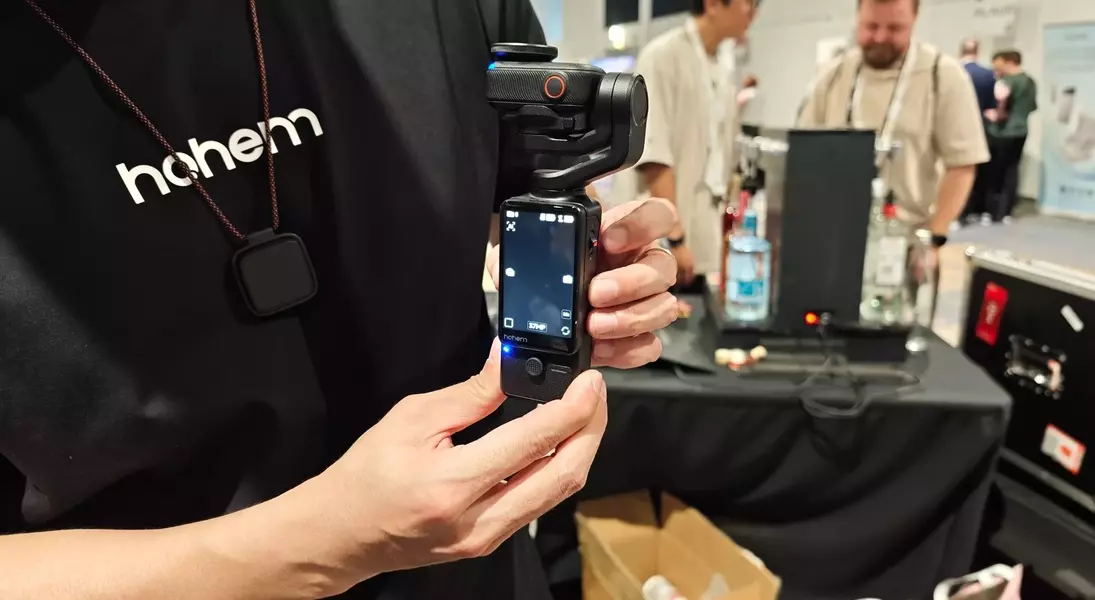
At the recent IFA Berlin 2026, a relatively unknown Chinese tech company named Hohem stole the spotlight with its unveiling of the Eyepic 2-in-1 Pocket Gimbal Camera. This device marks a significant milestone for Hohem, being its inaugural camera product and a self-proclaimed "world's first" in the compact video camera market, potentially challenging established brands like DJI and Insta360.
Hohem Eyepic: Unpacking Its Versatility and Cutting-Edge Features
During a detailed demonstration at IFA Berlin 2026, Hohem showcased the Eyepic's remarkable versatility and advanced specifications. Designed primarily for casual users and vloggers, this innovative gadget integrates a gimbal with a camera, offering a unique detachable design. A key feature is its ability to capture native 4K vertical video at 60 frames per second, catering perfectly to content creators focusing on platforms like TikTok and Instagram Reels. The device allows for a smooth transition to landscape video capture by simply rotating its 2.51-inch touchscreen, demonstrating exceptional adaptability.
The Eyepic further distinguishes itself with hands-free shooting capabilities. The camera unit can be easily detached from the gimbal and secured to a magnetic lanyard, offering unparalleled freedom for dynamic content creation. This magnetic feature also allows for attachment to various surfaces, enhancing its utility for diverse shooting scenarios. Additionally, the camera boasts impressive waterproofing, capable of functioning up to 10 meters (approximately 32.8 feet) underwater, making it suitable for aquatic adventures. When detached, the gimbal retracts and locks, and users can monitor the action through a 1080p live preview on the Eyepic's touchscreen. While pricing details remain under wraps, Hohem plans to launch the Eyepic around early 2027, coinciding with CES 2027, setting the stage for a new competitive landscape in portable video technology.
The introduction of the Hohem Eyepic at IFA highlights a trend towards more versatile and user-friendly camera technology. Its innovative design and robust features suggest a future where high-quality video creation is accessible and adaptable to various creative needs, potentially inspiring more manufacturers to explore similar hybrid solutions.