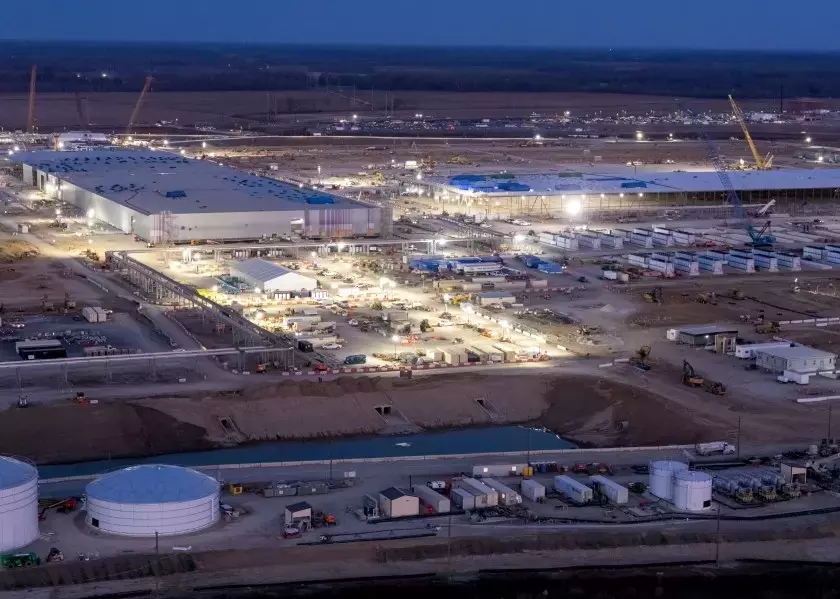
The current monumental investment in AI infrastructure by major tech giants, often referred to as hyperscalers, presents an unprecedented financial scenario. Professor Jessica Wachter of Wharton highlights the critical need for these companies to achieve an astonishing 2.7-fold increase in their own productivity by 2030 just to break even on projected expenditures reaching nearly .1 trillion. This aggressive growth, akin to the US IT boom of the 1990s but compressed into a far shorter timeframe, underscores the immense pressure on the AI industry. Should these ambitious profit targets not be met, the consequences could range from significant financial distress for these corporations, potentially culminating in bankruptcy, to what Wachter and her co-authors warn could be the largest misallocation of capital in economic history. With hyperscalers investing hundreds of billions annually in data centers, and projections soaring to over trillion in total AI capital investments from entities like Alphabet, Microsoft, Amazon, Meta, and Oracle over the next four years, the financial stakes are exceptionally high, especially when contrasted with current AI revenues that are a mere fraction of these investments.
The financial health of these AI powerhouses and the broader US economy hangs in the balance, as these investments are rapidly approaching 3% of the GDP. A significant concern arises from the unknown profitability and utility of these multi-billion-dollar facilities; predicting future computational needs for AI remains speculative, as the technology could become more efficient or demand for AI products might plateau or shift to more affordable alternatives. The situation is further complicated by the increasing reliance on borrowed capital, pushing free cash flow into negative territory for many of these companies, including Alphabet, which recently reported its first free cash deficit since its IPO. This reliance on debt amplifies risks, not just for investors but for the entire economy, as these loans are intricately woven into the financial system. Beyond the initial construction costs, hyperscalers face ongoing expenses for rising capital costs and the rapid depreciation of expensive GPU chips, which form the core of these data centers and require continuous upgrades to maintain competitiveness, otherwise risking these facilities becoming obsolete 'hulks'.
For these colossal investments to be sustainable, AI must not only generate massive revenues for hyperscalers but also catalyze widespread economic growth and fend off competition from more cost-effective AI models. Economists like Daron Acemoglu emphasize that sustained productivity gains across the economy are essential; without them, public sentiment towards AI could sour, curtailing future investments and revenue growth. While current economy-wide statistics show minimal productivity growth attributable to AI, surveys suggest business executives anticipate a significant boost in productivity over the next few years, accompanied by plans for increased AI spending. However, this expected productivity often comes with a caveat: a reduction in workforce, which could trigger public backlash against the technology. The intricate web of financing, exemplified by Meta's Hyperion data center project, further complicates matters, distributing financial risks through complex joint ventures and lease agreements that expose various financial institutions and indirectly, even pension funds and life insurance policies, to the success or failure of these AI ventures. This interconnectedness means that the gamble is no longer confined to the balance sheets of tech companies but extends to the broader public, raising concerns about who ultimately bears the costs should these ventures falter.
As the AI investment landscape continues to evolve at a breakneck pace, the broader societal implications extend beyond mere financial returns. The intertwined destinies of technological advancement, economic stability, and public well-being demand a thoughtful and ethically grounded approach. It is imperative that the pursuit of innovation is balanced with responsibility, ensuring that the benefits of AI are widely shared and that its development does not inadvertently create new vulnerabilities for society. True progress lies not just in technological leaps but in fostering an ecosystem where growth is sustainable, equitable, and resilient, preventing potential financial downturns from undermining the very foundations of human progress and collective prosperity.