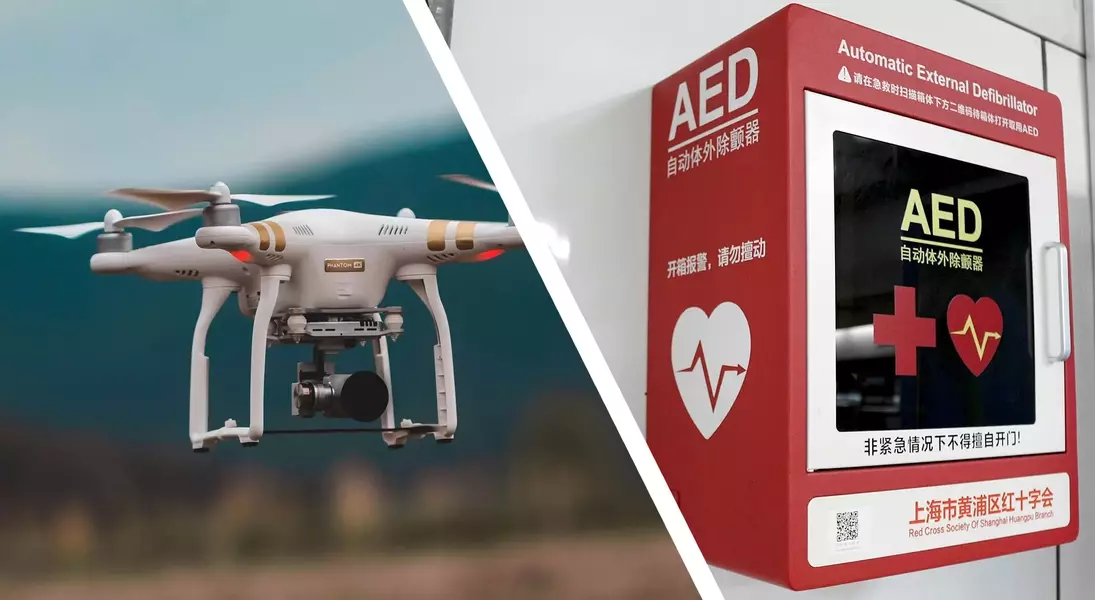
Out-of-hospital cardiac arrests currently have a survival rate of less than 10%, a statistic that French researchers are striving to improve. Their recent study explores a novel approach: deploying defibrillators via drones to enhance patient outcomes.
Emergency physician Hillary Minka and her team at Lariboisière Hospital conducted an analysis integrating drone delivery capabilities into Paris's existing network of automated external defibrillators (AEDs). Simulations indicated that drone delivery could reduce response times by an average of 3.76 minutes, ensuring that 95% of cardiac arrest patients receive an AED within five minutes. This is a substantial improvement over the current 30-40% success rate achieved through traditional foot and road transportation methods.
While drone delivery offers significant promise, researchers underscore the importance of increasing the number and strategic placement of fixed AEDs. They suggest that publicly accessible AEDs, rather than those in private locations, would further enhance readiness. The combination of these measures could extend five-minute AED coverage to an impressive 99.4% of cardiac arrest incidents. The next phase for the research team involves conducting real-world trials to validate these simulated findings, accounting for variables like weather conditions. Sweden has already implemented drone-delivered AEDs in some regions, paving the way for other countries to potentially adopt this life-saving technology.
This innovative research highlights a future where technology and thoughtful urban planning converge to enhance public health outcomes. By embracing drone technology and optimizing AED accessibility, we can empower communities with faster, more efficient emergency responses, ultimately saving more lives and fostering a safer, more resilient society.